Joint winners, overturned results and long-lasting controversies – Some of cycling's most memorable photo finishes
October 7, 2026
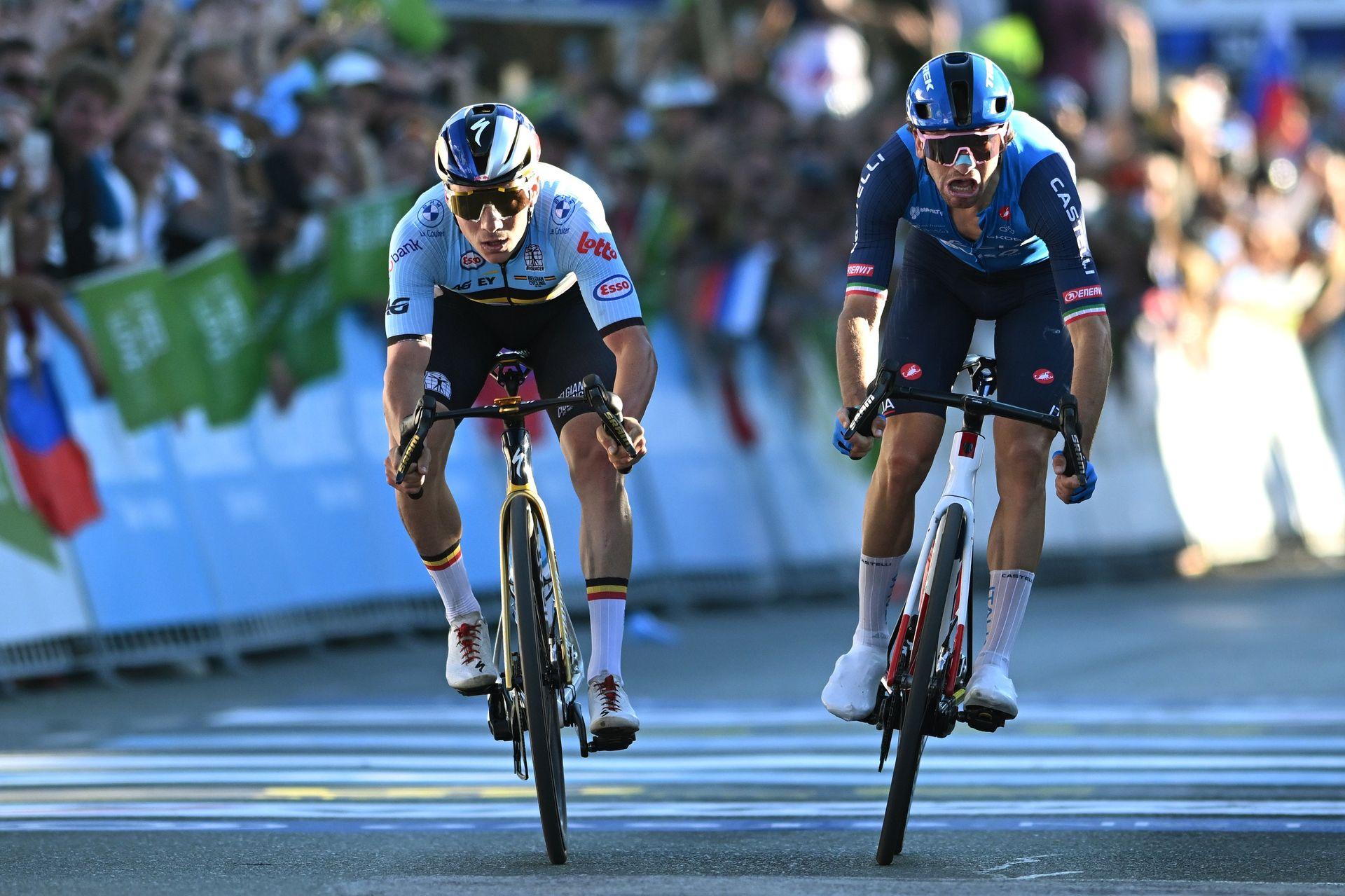
Cycling’s high-speed finish-line technology, which captures riders’ positions in millisecond slices, rarely sparks debate—but this week’s European Championships delivered a rare exception. Giulio Ciccone challenged the official result after finishing just under four millimeters behind Remco Evenepoel, citing discrepancies between the scanner’s output and other photos that appeared to show his front wheel crossing the line first.
Despite the Union Européenne de Cyclisme (UEC) providing two separate finish-line scans, Ciccone’s skepticism highlighted how the technology’s abstract, time-based visuals can leave room for interpretation, even when the margin is microscopic. The controversy underscores the occasional tension between raw data and riders’ perceptions, especially when the finish line itself isn’t visible in the scans.
While most photo finishes resolve without dispute, history offers a few cases where results were either overturned or shared. In 2016, Mark Cavendish’s Tour de France stage victory was decided by a sliver of advantage, a reminder that even the closest margins can seal a winner.
This season alone, Jensen Plowright and Wout van Aert were separated by an imperceptible gap on a Tour of [redacted] stage, proving that photo finishes—no matter how precise—can still leave lingering questions when the stakes are highest.
 Manchester United FC
 Tottenham Hotspur FC
 Liverpool FC
 Manchester City FC
 Khan Research Laboratories
 State Bank of Pakistan
 Hyderabad Kingsmen Academy
 Sui Northern Gas Pipelines Limited
 Ghani
Ghani Pakistan Television
 Oil & Gas Development Company Limited
 Victoria
 South Australia
 Chicago White Sox
 Cleveland Guardians
 Atlanta Braves
 Los Angeles Dodgers
 Indiana Pacers
 Minnesota Timberwolves
 Washington Capitals
 Pittsburgh Penguins
 Winnipeg Jets
 Colorado Avalanche
 New York Yankees
 Tampa Bay Rays
 Oklahoma City Thunder
 Milwaukee Bucks