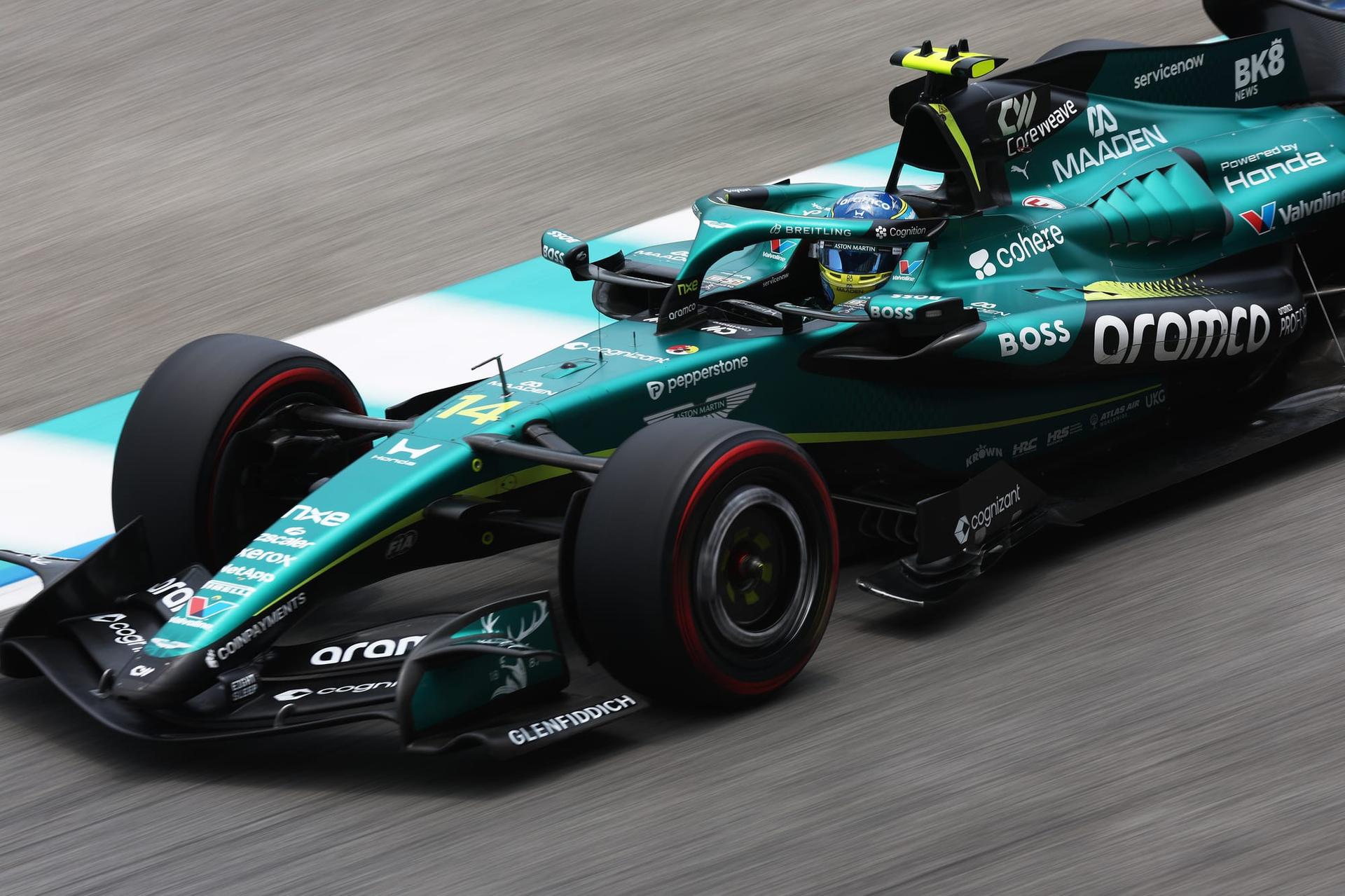
The extraordinary figures hinting at Aston Martin's pole potential
October 16, 2026
Aston Martin’s Formula 1 season has been defined by the stark contrast between its chassis potential and Honda’s power unit struggles, with new data suggesting the team’s car could have been far more competitive with a stronger engine. At Sepang, where both Aston Martins advanced to Q2 for the first time, Fernando Alonso’s 12th-fastest lap was just 2.090 seconds behind Max Verstappen’s pole time—despite Alonso losing only 2.238 seconds on the full-throttle straights.
This implies that with a power unit on par with Red Bull’s, Alonso might have claimed pole by a tenth and a half, highlighting the car’s underlying speed. The team’s sole update in Hungary delivered a noticeable improvement, with Alonso later praising the car’s balance and poise, though Honda’s subsequent ADU01 power unit upgrade failed to deliver the hoped-for driveability gains, leaving the team stuck between a promising chassis and a lagging engine.
The gap between Aston Martin’s performance and the front-runners widened sharply after Barcelona, as the top teams pushed ahead with developments while the AMR26 remained on its initial race spec. Even in Singapore, where Alonso suspected a broken turbo, the car’s cornering performance was more competitive than at Sepang, underscoring the chassis’s hidden potential when unshackled by power limitations.
 India
India West Indies
 Pakistan
 Sri Lanka
 England
 Warriors
 Cleveland Guardians
 Tampa Bay Rays
 Los Angeles Dodgers
 Milwaukee Brewers
 Tulane Green Wave
 Memphis Tigers
 Purdue Boilermakers
 Washington Huskies
 Coastal Carolina Chanticleers
 App State Mountaineers
 SMU Mustangs
 Virginia Cavaliers
 Texas Longhorns
 Florida Gators