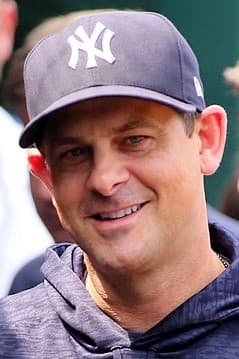
The Yankees' Game 2 loss to the Tampa Bay Rays in the ALDS highlighted a strategic puzzle for manager Aaron Boone, who opted to deploy left-handed hitters exclusively against lefty reliever Ian Seymour in a late-game collapse. With the Bronx Bombers trailing 5-1 in the sixth inning, Boone sent Luis García Jr.
and Spencer Jones to the plate against Seymour, then followed up with three more left-handed batters—Jazz Chisholm Jr., Trent Grisham, and Austin Wells—in the seventh. Seymour retired all of them, and Boone’s approach shifted to pinch-hitting Paul Goldschmidt for Ryan McMahon in the eighth, though the veteran righty managed only a harmless pop-up.
Boone defended his decision, noting Seymour’s perceived neutral profile and the team’s focus on getting on base rather than swinging for power in a hopeless deficit. The strategy underscored the Yankees’ offensive struggles beyond Ben Rice’s two solo homers, as left-handed hitters had fared slightly better than righties against Seymour this season (.244/.789 OPS vs.
.217/.683 OPS).
Meanwhile, the Yankees’ bullpen depth faced scrutiny after lefty reliever Brent Headrick, a key late-inning arm used in 81 of the team’s 161 regular-season games, showed signs of fatigue. His fastball velocity dipped to an average of 93.2 mph in Game 2—down from his season average of 94.1 mph—and he allowed a two-run single to Richie Palacios in the fifth after an error extended the inning.
Pitching coach Matt Blake emphasized the need for Headrick to maintain command and effectiveness with his fastball, slider, and splitter, though his workload has piled up as the postseason looms. The Rays’ bullpen dominated, leaving Boone with limited options to spark a late rally in a game the Yankees could ill afford to lose.
 Afghanistan
 Bangladesh
 South Africa
 Australia
 Pakistan
 Sri Lanka
 India
India West Indies
 Winnipeg Jets
 Colorado Avalanche
 New York Yankees
 Tampa Bay Rays
 Memphis Grizzlies
 Orlando Magic
 Oklahoma City Thunder
 Milwaukee Bucks
 Chicago Bulls
 Phoenix Suns
 Washington Capitals
 Pittsburgh Penguins
 Portland Trail Blazers
 Golden State Warriors
 Anaheim Ducks
 Edmonton Oilers
 San Diego Padres
 Milwaukee Brewers
 Kennesaw State Owls
 Jacksonville State Gamecocks